


News and Events
Beyond Compliance: The Future of Silica Management in the UK Stone Industry
May
The global stone industry is entering a period of rapid change regarding silica exposure, engineered stone processing, and workplace health standards.
What was once viewed as a health and safety consideration is now becoming one of the defining operational, legal, and commercial issues facing fabricators worldwide.
Across multiple countries, the pace of change is accelerating:
- Lawsuits relating to silica exposure and engineered stone processing are increasing globally
- Australia has already implemented major engineered stone bans
- California is introducing increasingly aggressive legislative controls and exposure enforcement
- Other U.S. states and international jurisdictions are beginning to follow
- Insurers, regulators, suppliers, and employees are all applying growing pressure across the industry
The direction of travel is clear.
Higher standards of silica control are no longer viewed as optional best practice — they are rapidly becoming the expected baseline for responsible fabrication businesses.
For UK fabricators, this is unlikely to remain a distant international issue for long.
The workshops that stay ahead over the next decade will likely be the ones that recognise this early and begin adapting now.
Importantly, this is not simply about buying extraction equipment or ticking compliance boxes.
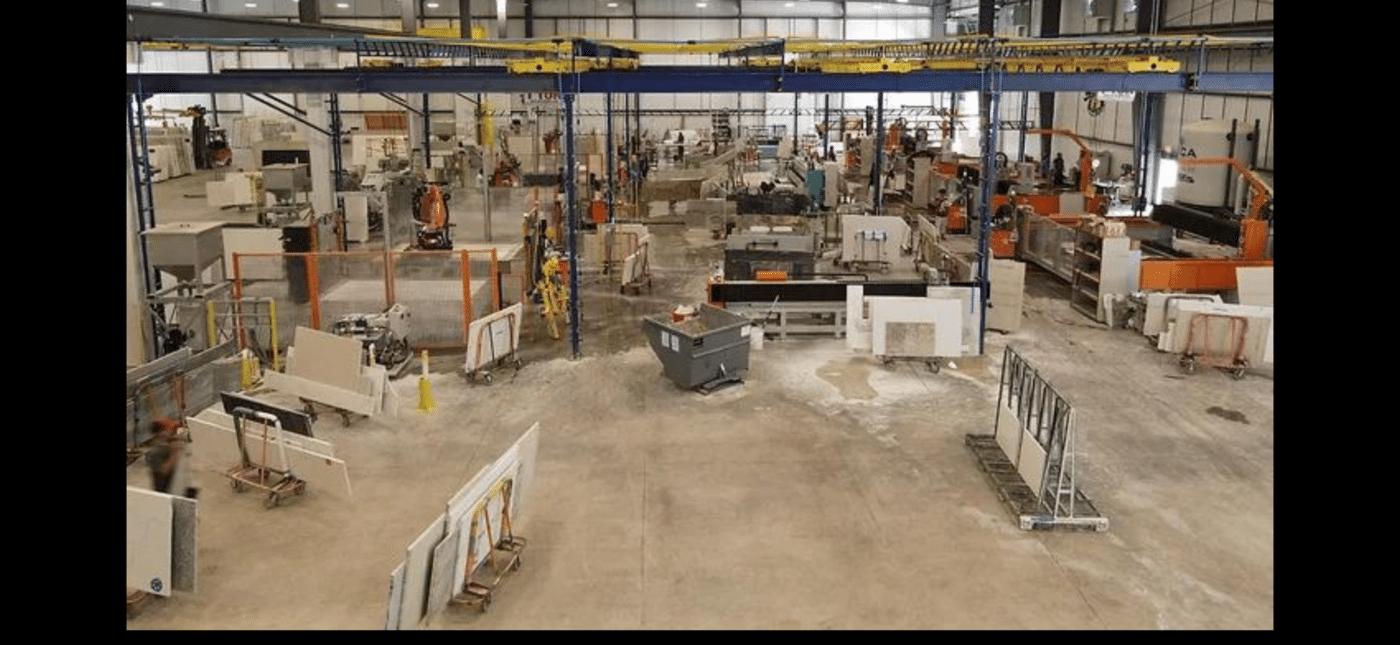
The future of silica management will require a wholesale cultural and operational shift across the entire fabrication environment.
1. Habitual Housekeeping Must Become Standard Practice
One of the largest silica risks inside many workshops is not always active cutting — it is settled contamination.
Dust and slurry that are allowed to accumulate throughout the day eventually dry out and become airborne again through:
- Foot traffic
- Forklift movement
- Air movement
- Machine vibration
- Compressed air use
- Opening and closing doors
The future of compliant fabrication environments will rely heavily on habitual housekeeping becoming second nature across the entire workforce.
This means:
- Constant cleaning during production
- No dry sweeping
- No compressed air blowdowns
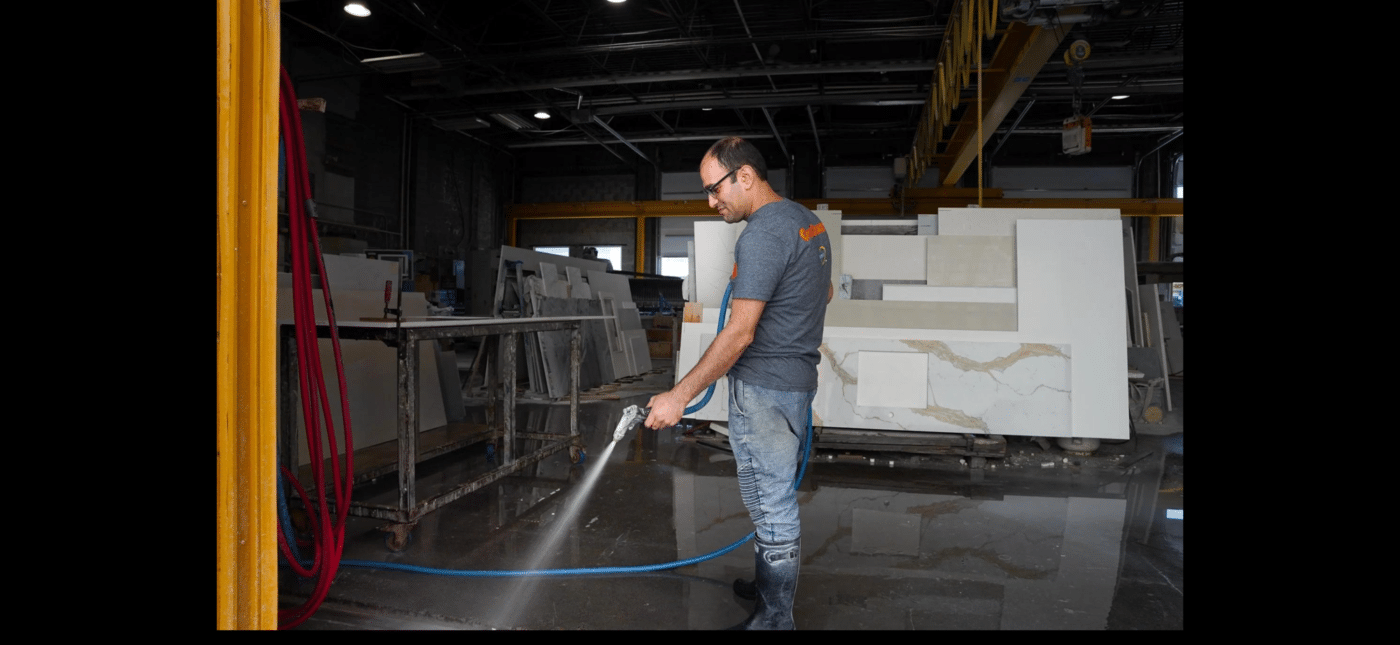
- Immediate washdown of contaminated areas
- Frequent removal of settled slurry
- End-of-day cleaning routines
- Daily inspection of high-risk areas
Many shops are now moving toward wet floor scrubbing systems at the end of each day to prevent fine silica-containing material drying overnight and being reintroduced into the air the following morning.
Good housekeeping is no longer simply about cleanliness.
It is becoming one of the primary silica control measures.
2. Wet Processing and Water Quality
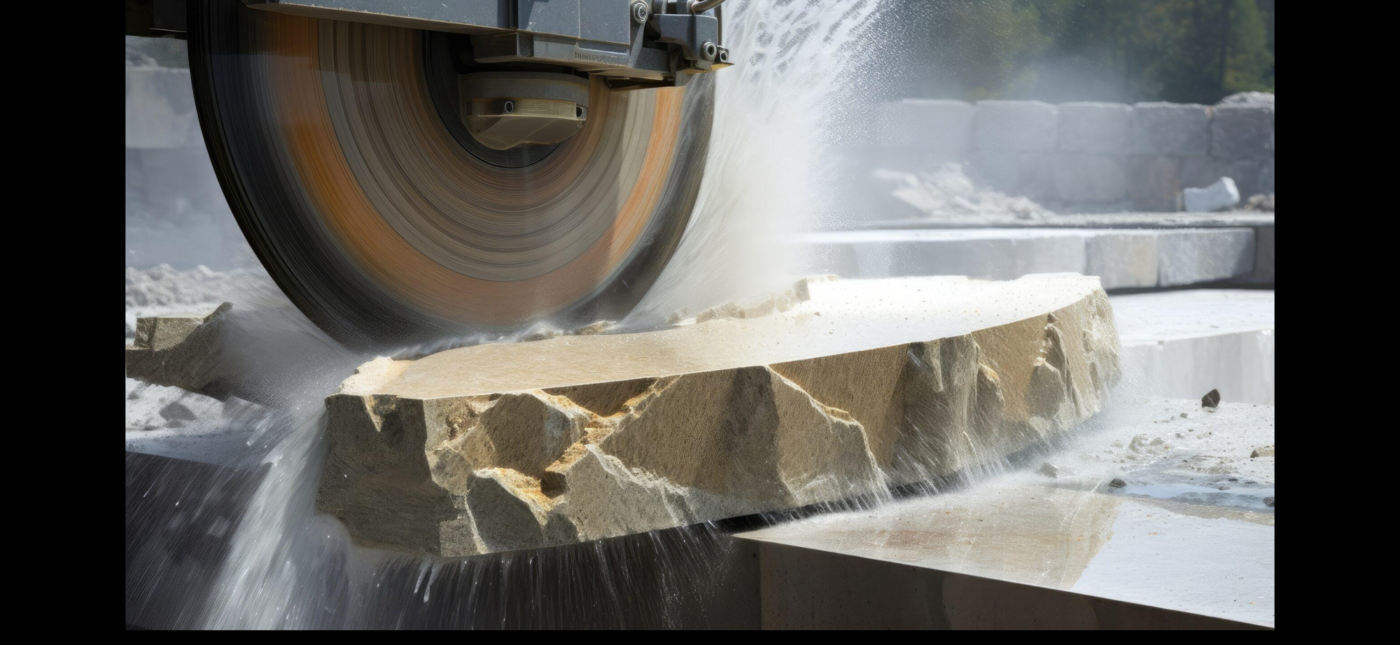
Dry cutting of stone materials — particularly engineered stone — is becoming increasingly difficult to justify from both a safety and liability standpoint.
Effective wet processing:
- Suppresses silica at source
- Prevents airborne particulate generation
- Protects nearby workers
- Reduces contamination spread around the workshop
However, simply adding water is not enough.
True silica suppression requires:
- Stable water pressure
- Continuous water flow
- Clean recycled water
- Reliable maintenance
- Effective delivery at the point of generation
Poor-quality recycled water can:
- Reduce suppression effectiveness
- Increase particulate recirculation
- Create contamination buildup
- Reduce operator visibility
As silica awareness increases, water treatment and recycling quality are becoming occupational health systems — not simply environmental systems.
3. Airflow, Extraction and Monitoring
One of the most underestimated silica risks is uncontrolled airflow inside fabrication workshops.
Large open roller doors and strong through-draughts can:
- Lift dried contamination from floors
- Spread settled particulate around the workshop
- Reintroduce dust into breathing zones
- Move contamination into cleaner areas
Future-focused workshops are increasingly considering:
- Controlled airflow
- Zoned workspaces
- Extraction placement
- Ventilation strategy
- Separation of dry and wet processes
Point-of-work extraction remains critical, particularly around:
- Hand-finishing stations
- CNC routers
- Edge polishers
- Bridge saws
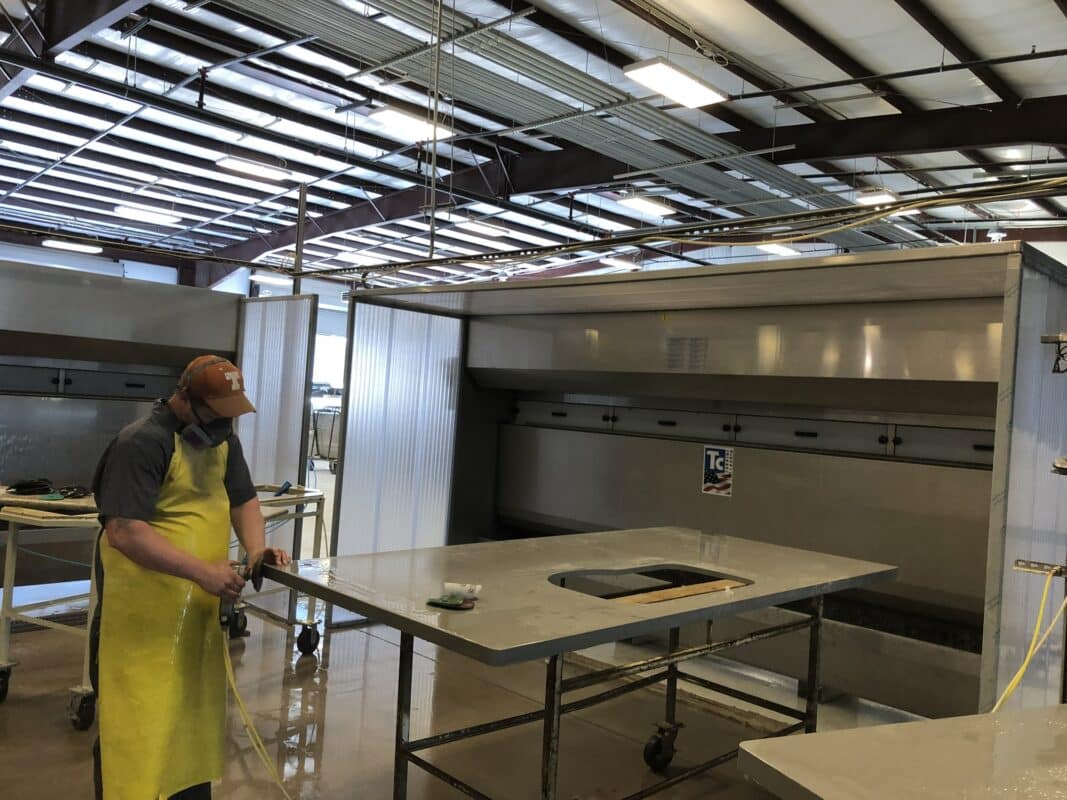
Waterwall systems are becoming increasingly popular due to their ability to capture airborne particulate close to source.
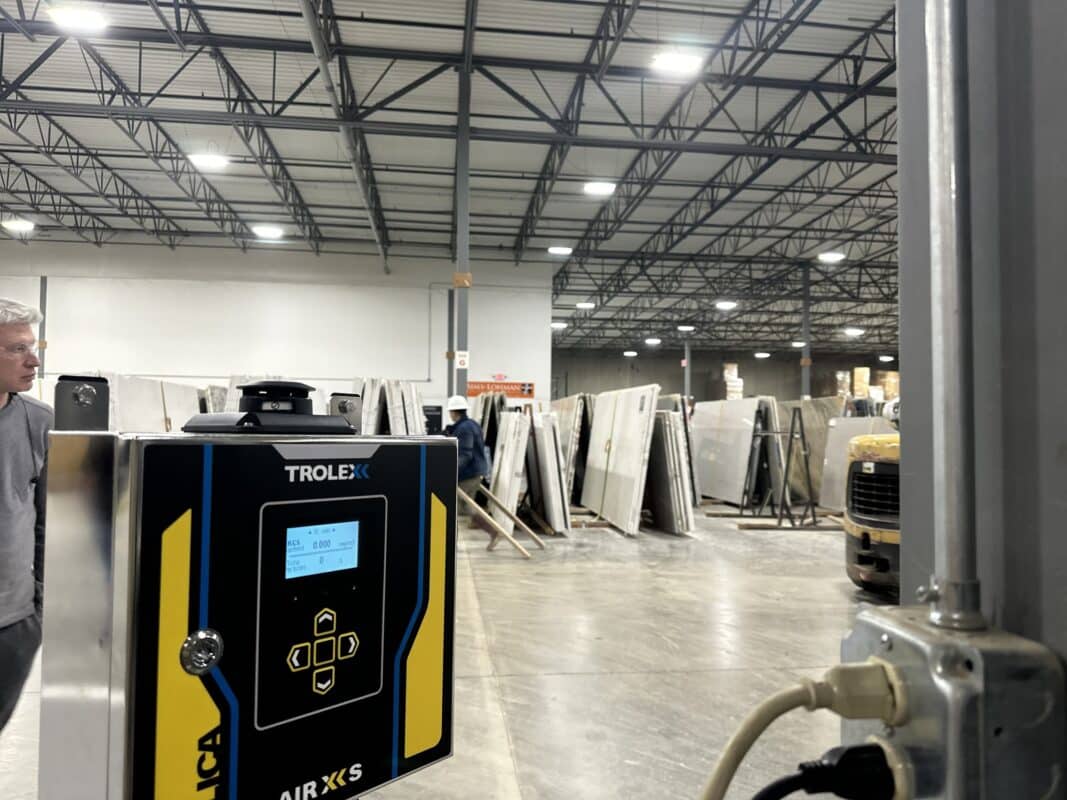
Air monitoring is also likely to become one of the defining areas of silica management over the coming years.
While gravimetric testing remains the accepted HSE standard for formal compliance assessment, newer real-time particulate monitoring systems are beginning to challenge traditional approaches.
These systems can provide:
- Continuous live particulate readings
- Real-time trend analysis
- Instant alerts to changing conditions
- Visibility into extraction performance
- Early warning of control failures
Even while certification and wider regulatory acceptance continue evolving, live monitoring demonstrates:
- Forward thinking
- Awareness of silica risks
- Commitment to workforce protection
- Continuous operational improvement
The shops gathering live environmental data today are likely to be significantly better prepared for future regulation and enforcement.
4. PPE and Workforce Protection
Respiratory protection standards are continuing to evolve rapidly.
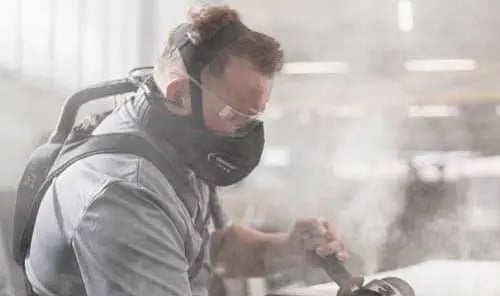
Many workshops are moving beyond disposable masks toward:
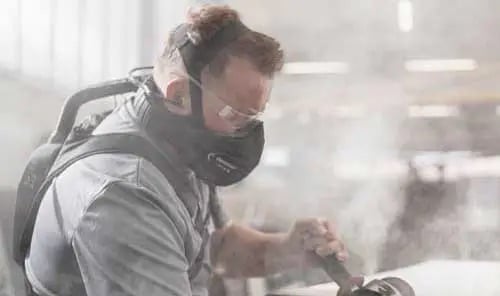
- Positive air-fed respiratory systems
- Full-face powered respirators
- Structured fit-testing programmes
- Dedicated PPE storage zones
- Separate changing facilities
Contamination control does not stop at the workshop floor.
Silica-containing dust can continue travelling home on:
- Clothing
- Boots
- PPE
- Tools
Forward-thinking facilities are increasingly implementing:
- Clean and dirty changing zones
- Workwear management systems
- Shower facilities
- PPE separation procedures
This demonstrates a much higher level of operational maturity and workforce protection.
5. Material Awareness and Supply Chain Responsibility
Not all engineered stone materials contain the same silica levels.
Fabricators increasingly need to understand:
- Exact slab composition
- Silica percentages
- Supplier specifications
- Technical data sheets
- Safety documentation
- Material traceability
This becomes particularly important for businesses importing their own slabs directly.
As global scrutiny increases, importers may increasingly be expected to:
- Verify material composition
- Maintain accurate documentation
- Demonstrate safe handling controls
- Understand supplied product risks
Australia’s engineered stone bans, increasing global litigation, and tightening controls in jurisdictions such as California are likely to accelerate wider international changes across the industry.
The Bigger Picture
The future of silica management in the UK stone industry is unlikely to be solved by a single machine, extraction system, or regulation.
The workshops that lead the industry over the next decade will likely be the ones that embrace:
- Cleaner operational standards
- Better housekeeping culture
- Controlled airflow
- Wet processing discipline
- High-quality recycled water
- Continuous monitoring
- Better PPE practices
- Improved worker facilities
- Greater awareness throughout the business
Most importantly, this is not necessarily about spending huge amounts of money.
Many of the most effective improvements come from:
- Behaviour
- Consistency
- Procedures
- Training
- Accountability
- Operational discipline
Ultimately, silica management is becoming less about individual compliance measures and more about a wholesale cultural change across the entire fabrication environment.
The businesses that recognise that early will not only be safer and more compliant — they will likely become the benchmark for the future of the industry.
